
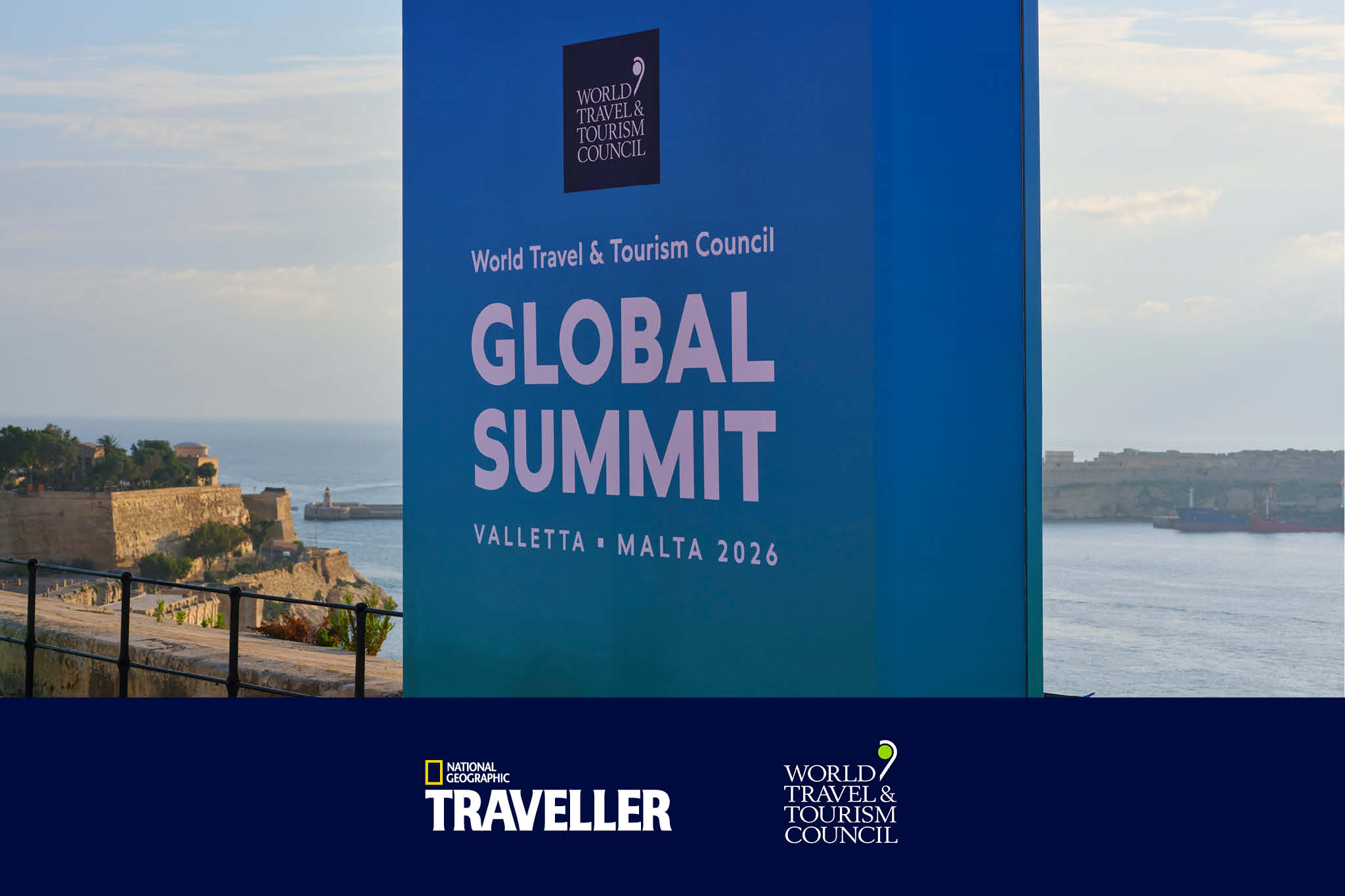
Six takeaways from the WTTC Global Summit in Malta
The World Travel & Tourism Council (WTTC) Global Summit, held between 7-9 October 2026 in Valletta, Malta, explored a range of issues within the travel industry, covering topics as diverse as longevity, accessibility, technology, sustainability, investment and the future.
National Geographic Traveller (UK)’s editor-at-large, Pat Riddell, was in attendance. Here are his seven key takeaways:
1. Developing luxury destinations: Luxury consumers seek experiences and authenticity. Alejandro Reynal, president and CEO of Four Seasons Hotels explained: “To establish a luxury destination, you don’t do it overnight. It’s going to take at least 10 to 15 years, from the point you start, to develop that destination. So having clarity of vision and consistency is important. For us, one requirement is this: people come to a location because they trust the brand, and they know the product experience will be there, and the service experience will be there too.”
2. Agentic travel: To make full use of AI, businesses need to change to keep up. It may be easier to adopt AI in finance, HR or a call centre, but when it comes to travel, the complexity of the legacy systems is a challenge. There is likely to be around five billion digital wallet users by 2028 and to capture a totally seamless experience from discovery right through to check out, travel businesses need to be connected to digital wallets.
3. Malta’s success as a tourism hub: WTTC research shows the travel and tourism sector in Malta accounts for a staggering 16.8% of its GDP. In fact, a record four million visitors arrived in Malta in 2025 and spent almost €4bn (£3.4bn). Comparatively, across European countries, the sector contributed on average 3.6% of GDP.
4. Wellness and longevity: With the global wellness tourism industry projected to reach almost $1.5 trillion (£1.1 trillion) by 2029, longevity is the latest trend sweeping the industry. There are three main questions: why do people travel, which distinctive healthspan product are we ready to offer and how long will our relationship with guests last? Longevity travel doesn’t begin at check-in and doesn’t end at check-out.
5. Seamless travel: An ecosystem joining airlines, airports, cruise companies, car hire and hotels could be the future of seamless travel. Technology isn’t the barrier but the fact the industry was working in different silos. Paul Griffiths, CEO of Dubai Airports, said “The traveller, on a journey end-to-end, crosses those silos horizontally. Imagine pushing a supermarket trolley across railway tracks. That’s how it feels to the average traveller now.”
6. The future workforce: By 2035, 1.2 billion young people will reach working age, while only 400 million jobs are expected to be created — a crisis highlighted by the World Bank. The travel industry has to be an integral part of the response to that, otherwise the repercussions will be poverty, irregular migration and conflict.
On the last day of the summit, the WTTC Youth Movement was launched to deepen the sector’s understanding of young people, as well as their priorities, expectations and aspirations — and to use those insights to help create the right jobs, opportunities and career pathways.
This year, more than 1,000 delegates, 200 CEOs, 100 students and 60 ministers gathered in Malta, alongside a global media contingent, for three days of talks, debates and discussion. Bringing the summit to a close, former Canadian prime minister Justin Trudeau highlighted not only the economic importance of tourism but also its power to foster curiosity, empathy and greater understanding between cultures. As he observed: “There’s a tendency right now for governments to encourage people to look inward, to become more insular and mistrustful of the rest of the world. That’s not a productive path, and the best counter to it is tourism.”
Find out more about the World Travel & Tourism Council Global Summit at wttc.org.
###
About APL Media
APL Media is a multi-award-winning content marketing agency and publisher, creating high-quality print, digital and live media across the travel and lifestyle sectors since 1997. It’s published National Geographic Traveller (UK) under licence from National Geographic Partners LLC since 2010, alongside brand extensions including guides, events and digital platforms. Its portfolio includes Living360, a digital lifestyle brand spanning wellness, travel, food, sustainability and culture.
APL Media delivers custom content, branded campaigns and editorial consultancy, internship schemes including Step Up and produces leading events such as the Travel Media Awards. It’s also a leading reseller of advertising for national newspapers. Its trade titles include Postcards and the ASTA Worldwide Destination Guide, with content also created for national newspapers. aplmedia.co.uk